Understand common EPDM sealing-strip applications and compare EPDM with silicone by temperature range, weather resistance, compression performance, service life and project cost.
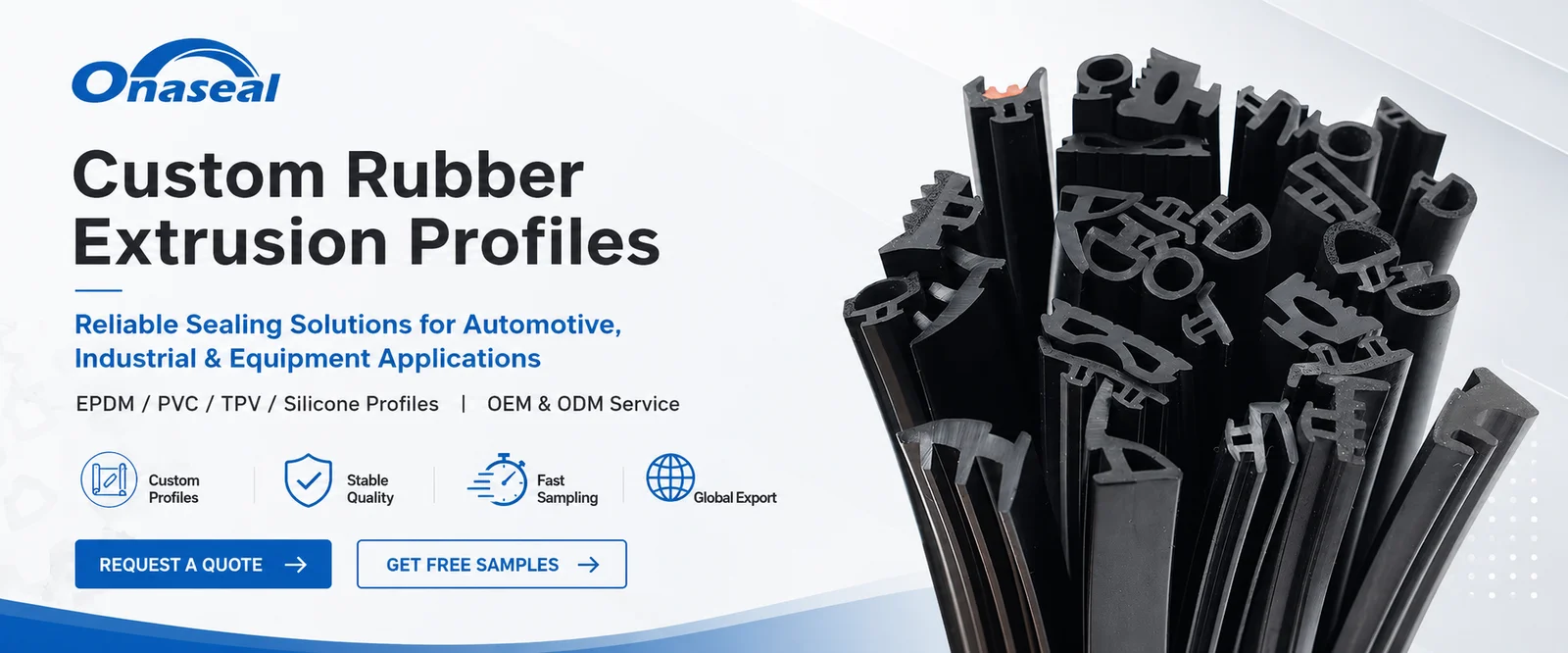
EPDM is commonly evaluated for outdoor, automotive and construction weather seals where weather exposure, mechanical requirements and project cost matter. Silicone is commonly evaluated when the selected grade must cover a wider temperature range or when translucent or bright colors are required. Confirm either choice against the actual compound grade, contact media, compression and regulatory requirements.
In the world of industrial sealing, EPDM (Ethylene Propylene Diene Monomer) and Silicone are two of the most widely used synthetic rubbers. While they may appear similar at first glance, their chemical properties, environmental resistance, and cost profiles vary significantly.
EPDM is a synthetic rubber commonly specified for outdoor weather exposure. It is widely used for automotive weatherstrips and EPDM seals for construction.
Silicone elastomers are considered where broader temperature capability, flexible color options or specialized service conditions are required. Food-contact, medical or other regulated use requires the correct compliant grade and supporting documentation; the material name alone does not establish compliance.
| Feature | EPDM Rubber | Silicone Rubber |
|---|---|---|
| Typical profile temperature range | -40°C to +120°C | -60°C to +200°C |
| Weather/UV Resistance | Commonly selected for outdoor exposure; confirm the compound | Grade-dependent; confirm the compound and exposure |
| Project cost | Often evaluated for cost-sensitive weather sealing | May involve higher material or processing cost; request a project quote |
| Tear strength | Compound- and test-specific | Compound- and test-specific |
| Chemical Compatibility | Must be checked against the specific fluid and EPDM grade | Must be checked against the specific fluid and silicone grade |
Source note: The temperature ranges above are the application ranges published in Trelleborg's material-selection guide for sealing profiles. Actual limits vary by compound, media, geometry and test method; confirm the selected production grade.
Search demand for EPDM sealing strips commonly comes from automotive weatherstripping, construction joints, door and window systems, equipment enclosures and outdoor industrial sealing. Buyers compare profile geometry, compression, mounting method, compound requirements, annual volume and secondary operations—not only raw material price.
You are working on outdoor projects like building windows, solar panel sealing, or car door weatherstrips. Compare the available EPDM grades when outdoor exposure, mechanical requirements and project cost are important.
Your application involves temperature conditions outside the confirmed range of the available EPDM grade, or it needs translucent or bright colors. Food-contact or medical use requires a specifically compliant silicone grade and supporting documentation; silicone by itself does not establish compliance.
Compression recovery cannot be decided by polymer name alone. Compare compound-specific compression-set data at the intended temperature, compression percentage and exposure time, then validate the finished profile with samples.
For translucent or bright colors, review custom silicone sealing profiles. For custom EPDM rubber profiles, confirm color availability with the selected compound and approve a production sample. Color alone does not establish material performance.
Move from material selection to profile evaluation with product-specific specifications and sample support.
Weather-resistant profiles for automotive, construction and equipment sealing.
Colored and temperature-resistant silicone profiles for specialized applications.
D, P, E and I profile foam seals for controllable gap compression.
EPDM is often the more economical starting point for high-volume outdoor weatherseals. Silicone may carry a higher material and processing cost, but it can be the better value when wider temperature capability, color stability or specialized compliance is required. Final pricing depends on compound grade, profile weight, tolerances, tooling, order quantity and secondary processing.
Both EPDM and silicone can be extruded as flexible lip seals. Choose EPDM for common automotive, construction and outdoor sealing; evaluate silicone when the lip must remain flexible across more demanding temperature conditions or when specific colors and regulatory requirements matter. Confirm lip thickness, compression, contact surface and operating temperature with samples.
EPDM compression seals are widely used for outdoor doors, enclosures, vehicles and construction joints because the material combines weather resistance with practical project cost. Profile geometry, compound hardness and the installed compression range should be matched to the gap so the seal can recover after repeated opening cycles.
Silicone compression seals may be evaluated when the application has more demanding temperature conditions, special color requirements or material-specific compliance needs. Do not choose by material name alone: compare compression set, operating temperature, contact pressure, chemical exposure and expected service cycles using the actual profile and samples.
Are you comparing a seal's resistance to a fluid, or checking an adhesive, lubricant or sealant used during installation? These are different selection questions. Do not treat the names EPDM and silicone as a blanket compatibility approval.
Parker's O-Ring Handbook provides compound and fluid compatibility guidance. Its ratings are a starting point for evaluation, not approval of a finished Onaseal profile or bonded assembly.
These references provide general material-selection guidance, not a substitute for compound-specific test data. Onaseal confirms final recommendations only after reviewing the application, operating environment and sample requirements.
For sourcing decisions, market fit depends less on a generic material label and more on the compound, profile design, production controls and documentation required by the application.
Onaseal does not present a universal market price because sealing-strip cost is profile- and project-specific. Send a drawing, sample or section photo with service conditions and estimated quantity for a comparable quotation.
For many outdoor B2B weather-sealing applications, EPDM is a practical starting point. Where wider temperature capability, specific color or specialized regulatory requirements are important, an appropriate silicone grade may be evaluated. Confirm the decision with application data and sample testing.
Still unsure? Zhuhai Onaseal Technology can help. Our engineering team can evaluate your specific requirements and recommend the optimal material for your custom extrusion project.
Send us your application environment and drawings for professional advice.
Get A Professional Quote