Send a drawing, cross-section photo, physical sample or application details for a project-specific review of material, tooling, sampling, inspection and production requirements.
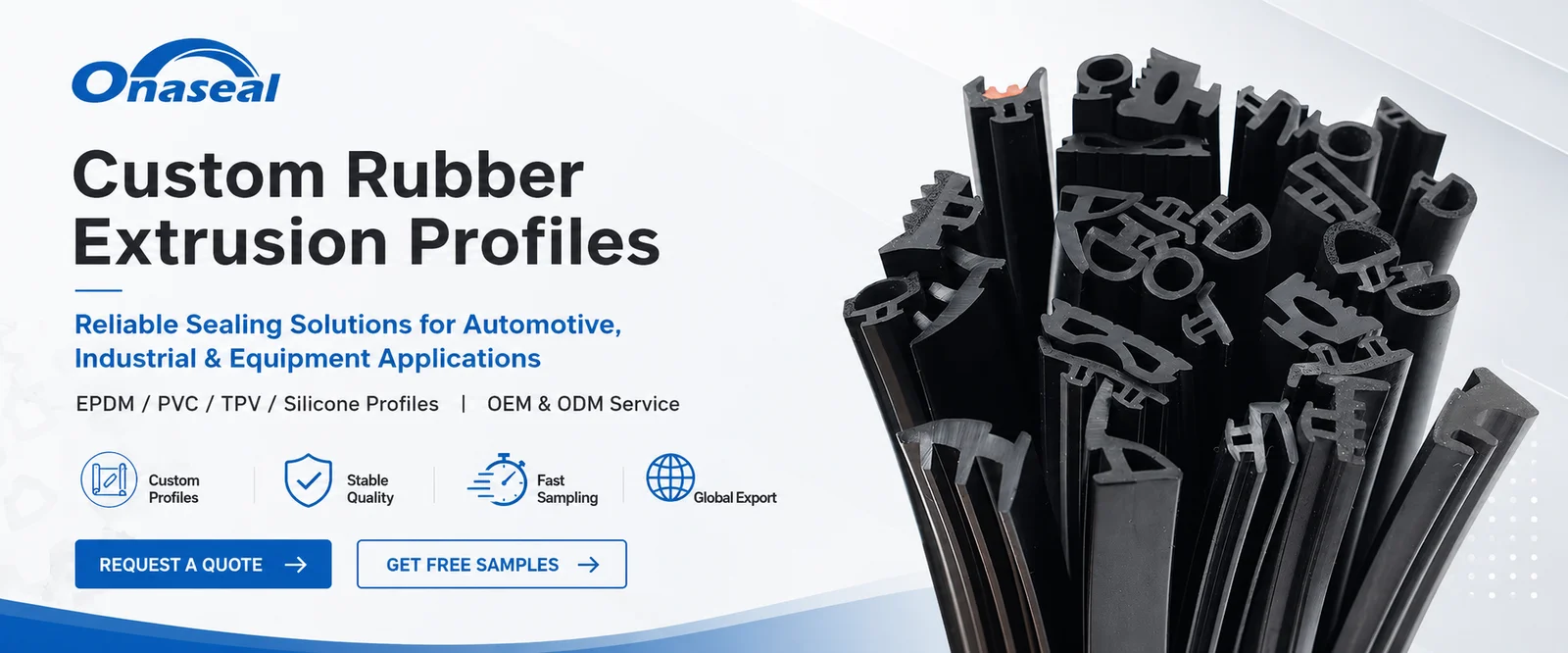
A custom rubber extrusion service converts a buyer's cross-section, mating geometry or physical sample into a repeatable sealing profile. The review covers material, hardness, solid or sponge construction, tolerances, tooling, trial samples, inspection and production packaging. Review the sealing strip manufacturing process to understand each step from requirement review through final inspection.
For the fastest feasibility review, provide an end-view drawing with dimensions, the working gap or grip range, service temperature, exposure conditions and estimated order quantity. You can first review our rubber extrusion profile catalog for standard shapes, material choices and specification inputs. For panel-edge projects that need positive clip-on retention, compare our metal-reinforced PVC edge trim and send the minimum and maximum finished flange thickness.
| Available input | Recommended route |
|---|---|
| Dimensioned CAD or PDF drawing | Drawing and tolerance review |
| Existing physical seal | Sample measurement and section matching |
| Application only | Mating geometry and performance review first |
| Existing tool or profile reference | Compatibility and ownership confirmation |
EPDM, PVC, TPV, silicone, sponge and multi-material profile solutions.
Profile assessment, extrusion tooling and sample confirmation process.
Coils, cut lengths, OEM labels, export cartons and customized packaging.
Each project follows a documented review path. Timing and commercial terms are confirmed only after the profile, material and inspection scope are understood.
Incomplete inputs can change tooling, price, sample route and lead time. Send what is available and mark unknown items for engineering review.
| Input | What to provide | Why it matters |
|---|---|---|
| Application | Equipment, door, window, vehicle or enclosure; indoor/outdoor use | Defines environmental and functional requirements |
| Profile geometry | Drawing, overall width/height, wall thickness, gap or grip range | Supports fit and extrusion-feasibility review |
| Material | Preferred polymer, hardness, sponge/solid construction, color | Affects compression, weathering, temperature and processing |
| Performance | Temperature, UV, water, chemicals, closing force or named test method | Turns general expectations into measurable requirements |
| Order format | Annual quantity, order quantity, coil or cut length, packaging and destination | Supports tooling, MOQ, packing and freight planning |
| Approval criteria | Critical dimensions, tolerances, sampling level and required documents | Creates a shared sample and production acceptance reference |
Confirm tooling charge, ownership, storage, maintenance and conditions for future use.
Define which drawing revision, material and measured characteristics control approval, then document the approved fitting method with the sealing strip installation guide.
Agree critical and non-critical dimensions using an applicable tolerance standard or drawing.
Record approved changes to material, tooling, dimensions, adhesive, packaging or test method.
Sample availability, tooling cost, MOQ and lead time depend on the exact profile and order requirements; they are stated in the project quotation rather than guaranteed on this page.
Review how drawings, samples, production requirements, inspection points and export packaging are managed for custom sealing profiles.
Yes. A representative sample can support section measurement and material review, but final dimensions, tolerances and performance requirements should be confirmed before tooling.
Projects may be reviewed for EPDM, silicone, TPE, TPV, PVC, solid rubber or sponge constructions according to temperature, weathering, compression and contact-media requirements.
Cross-section complexity, profile size, compound, tolerance, secondary operations, validation requirements, order quantity and packaging all affect the quotation and schedule.