Custom solid and sponge EPDM sealing strips for doors, vehicles, equipment, enclosures and construction applications.
Sample availability, any sample charges, freight and delivery terms are confirmed after reviewing your profile and application requirements.
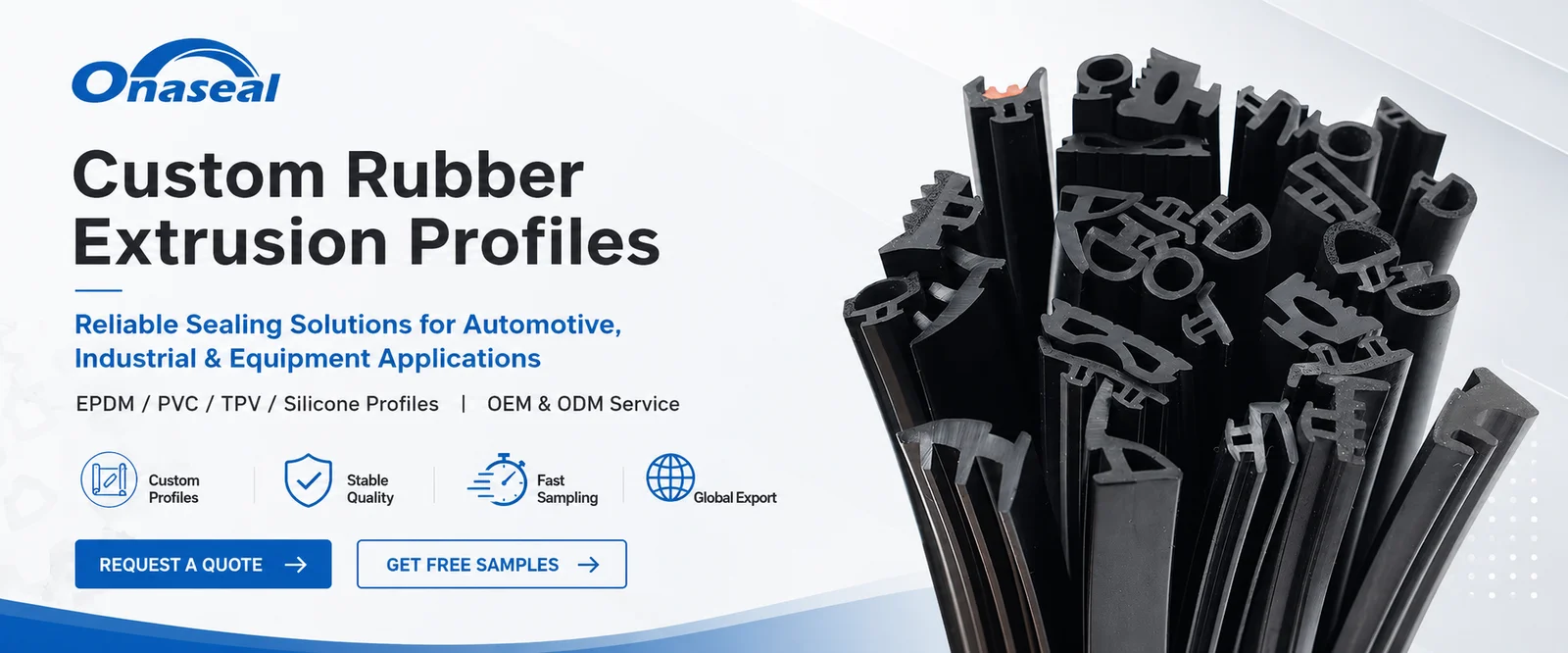
Start with the cross-section, working gap, compression target, mounting method and exposure conditions. A sealing strip that fits the drawing may still perform differently if the closing force, surface, corner radius or service environment changes.
Send a drawing, profile photo or physical sample together with the application and expected quantity. We can use this information to discuss feasible materials, tooling, sampling and supply format.
The product family should match the way the seal is retained and compressed. After choosing the closest profile type, confirm the detailed cross-section from a drawing or sample.
| Profile type | Typical selection need | Critical checks |
|---|---|---|
| Solid EPDM strip | Firm spacers, protective strips and low-deflection sealing edges | Hardness, thickness, contact load and fixing method |
| Sponge EPDM seal | Compressible weather and enclosure sealing | Density, free height, working gap, compression and recovery |
| Bulb or hollow profile | Controlled closing force across a variable gap | Bulb direction, wall geometry, gap range and mating surface |
| U-channel or edge-grip seal | Push-on retention along sheet-metal or panel edges | Finished edge thickness, carrier, bend radius and pull-off retention |
| Self-adhesive strip | Bonded installation on a clean flat substrate | Surface, preparation, adhesive grade and installation conditions |
If you need a new cross-section developed from CAD data or a physical sample, continue to our custom EPDM rubber extrusion manufacturer page. This page remains the overview for comparing EPDM sealing strip types.
Use these fields when preparing an RFQ. Values should be confirmed for the real application rather than copied from an unrelated profile.
| Selection field | Information to provide | Why it matters |
|---|---|---|
| Cross-section | Drawing, dimensions, sample or clear end-view photo | Defines the profile geometry and tooling discussion |
| Working gap | Minimum and maximum gap after assembly | Helps evaluate compression and closing force |
| EPDM structure | Solid, sponge or combined concept | Affects flexibility, grip and compression behavior |
| Environment | Outdoor exposure, temperature, water, dust or chemicals | Guides material and surface discussions |
| Installation | Push-on, clip, adhesive, channel or mechanical fixing | Determines base geometry and retention needs |
| Supply format | Cut length, coil, joint, label, carton and annual demand | Supports quotation and packaging planning |
Compression and weather seals for frames, panels, access doors and building components.
Profile concepts for door openings, compartments, body panels and transport equipment.
Dust, water, vibration and gap sealing around cabinets, machines and enclosures.
Custom rubber profiles for glazing, joints, facades and prefabricated assemblies.

Reference images help identify product families; final geometry and suitability must be confirmed from your drawing or sample.
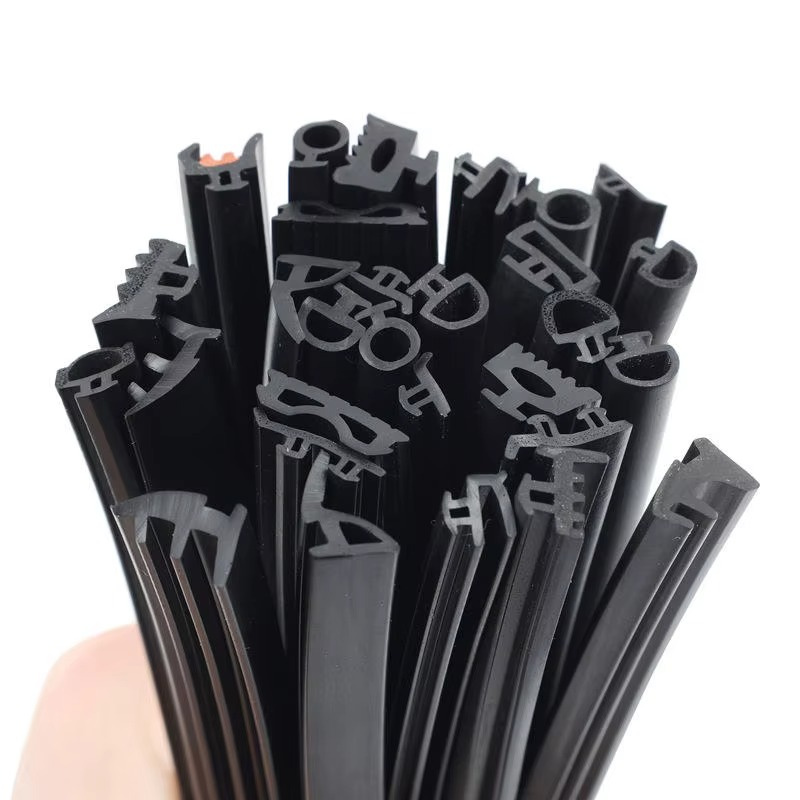
Review additional solid, hollow and channel profile examples.
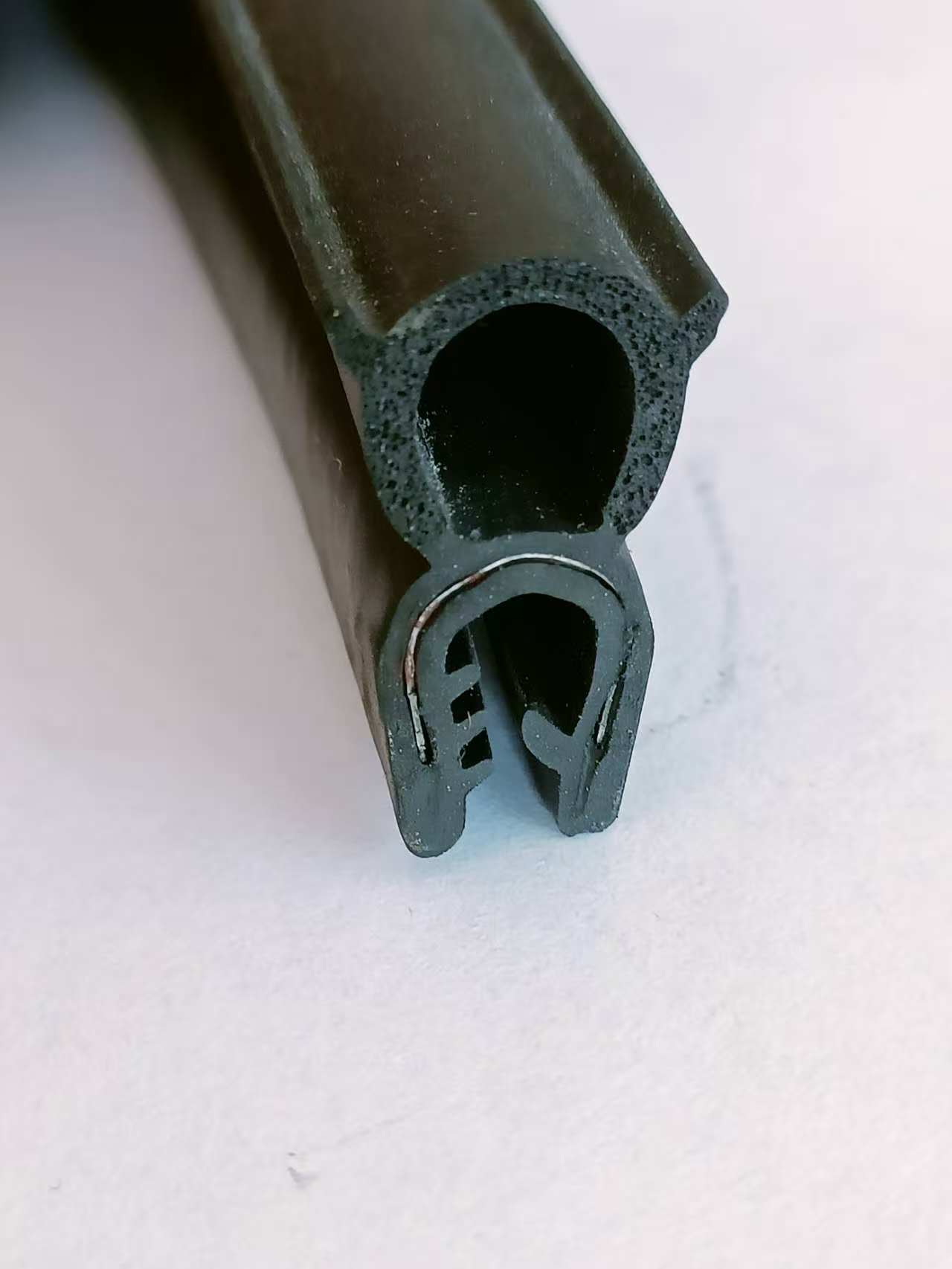
Profiles for vehicle doors, trunks, hoods and body openings.
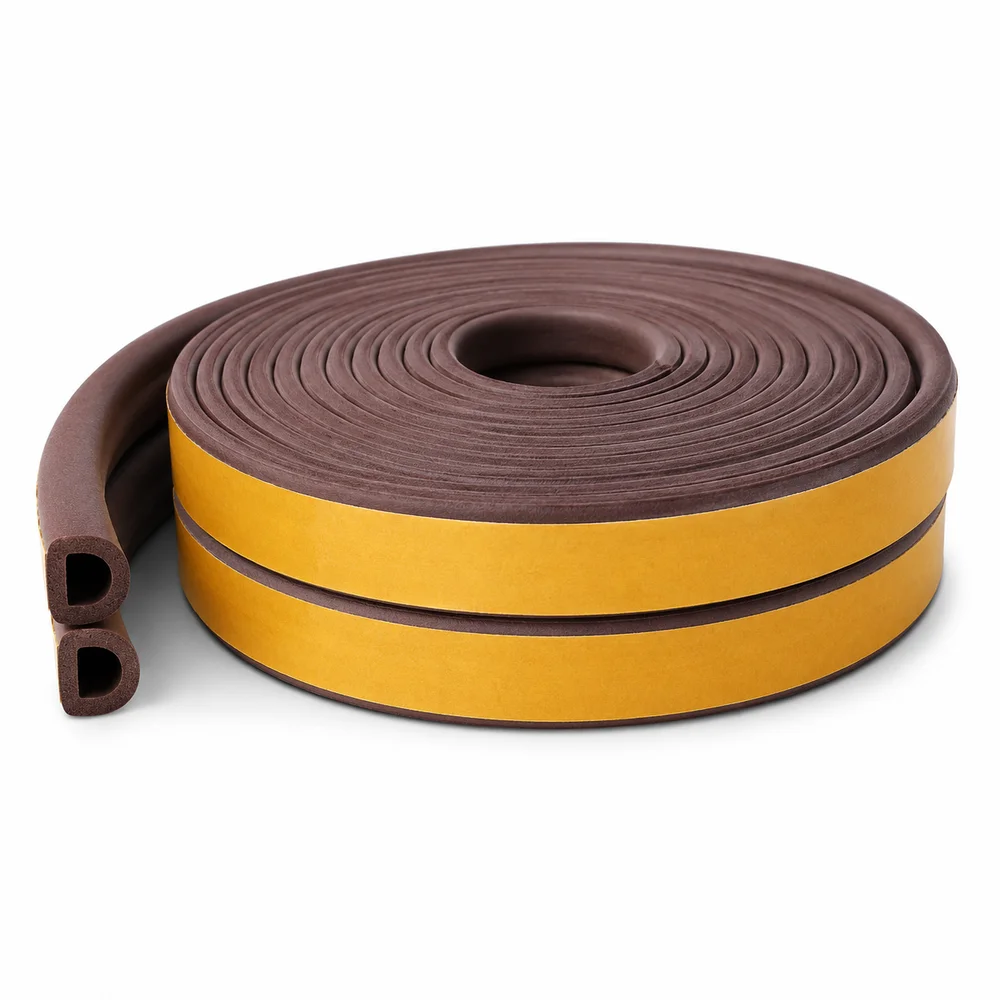
Compare D, P, E and I profile adhesive foam weatherstrips.
See custom EPDM rubber extrusion manufacturing capabilities →
Yes. Send the cross-section, dimensions, application and quantity for feasibility review.
Solid, sponge and combined profile concepts can be discussed according to the required compression and installation method.
Provide dimensions, application, quantity, length, material or compression target, color, packaging and any adhesive or carrier requirement.
Available stock samples and custom trial requirements can be discussed after the profile is reviewed.
Attach a drawing or profile photo and include the application, dimensions and quantity. Use the detailed RFQ form for specifications, or WhatsApp for a shorter first contact.