
Published: November 11, 2026 · Reviewed by: Onaseal profile engineering team
Quick Answer
Choose a refrigerated truck door seal by matching the complete cross-section—not only the product name or overall width. Confirm the rigid channel or retainer dimensions, flexible lip height and direction, minimum and maximum closed-door gap, corner and joint layout, perimeter length, and service environment. A relaxed original sample, square-on cross-section photo, ruler measurements and installed-door photos provide the fastest basis for comparing a 27 mm, 57 mm, dual-lip or retainer-mount profile.
Which Refrigerated Door Seal Type Should You Review?
| Profile option | Review it when | Confirm before ordering |
|---|---|---|
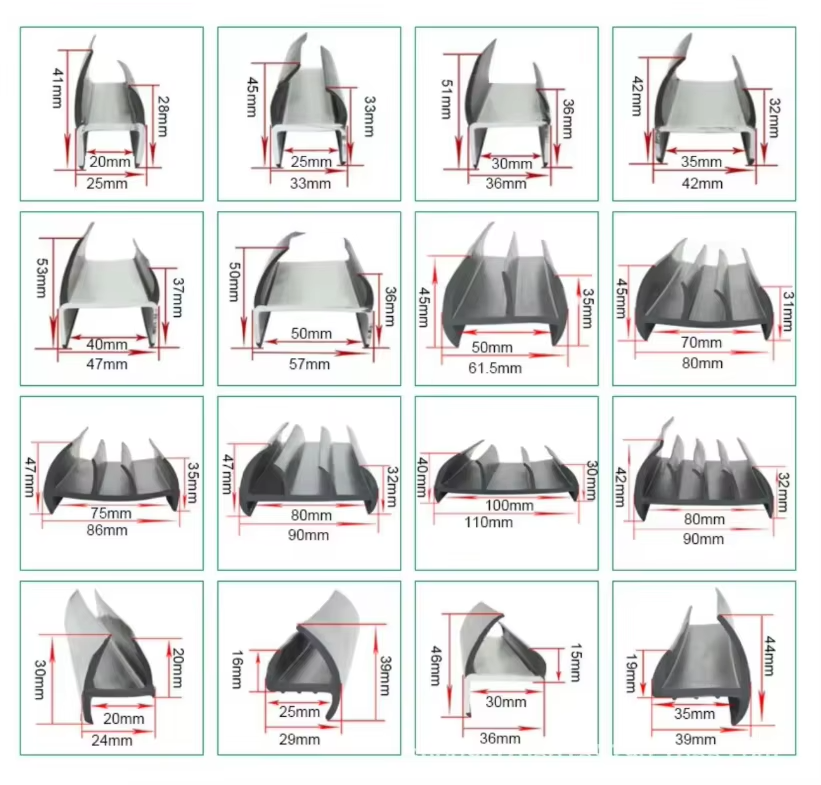
| 27 mm compact profile | The existing door uses a relatively narrow channel format; the Onaseal reference section includes a 20 mm inner channel. | Channel opening and depth, lip height and direction, insertion fit and closed-door contact. |
| 57 mm wide profile | The door uses a wider mounting format; the Onaseal reference section includes a 50 mm inner channel. | Retainer width, free profile height, compression path and hinge/latch gap variation. |
| Dual-lip profile | Two flexible contact lips are required to follow the door-frame geometry or provide staged contact. | Which lip contacts first, closing effort, lip orientation, corner construction and actual working gap. |
| Retainer-mount profile | A flexible sealing section locks into or mounts over a defined rigid channel or retainer. | Retainer cross-section, locking edges, insertion direction, pull-off resistance and replacement access. |
Do Not Choose by Width Alone
Two profiles with a similar outside width can have different channel depths, locking features, lip angles or compression behavior. Compare the entire relaxed cross-section and the installed geometry. Distorted, stretched or permanently compressed samples should not be used as the only dimensional reference.
Match the Mounting Interface
Measure the rigid channel, PVC carrier, metal retainer or flange that holds the seal. Record the opening, internal width, depth, wall thickness and locking features.
Match the Working Contact
Record where each lip touches the frame, the direction of deflection and the minimum and maximum gap around the closed door.
Check Door Closing Effort
A profile that is too tall or too stiff can increase closing force. A profile that does not reach the frame may not maintain contact.
Confirm Corners and Joints
Record whether the gasket is supplied as coils, cut lengths, joined frames or sections with separate corner construction.
3-Sided vs 4-Sided Door Gasket
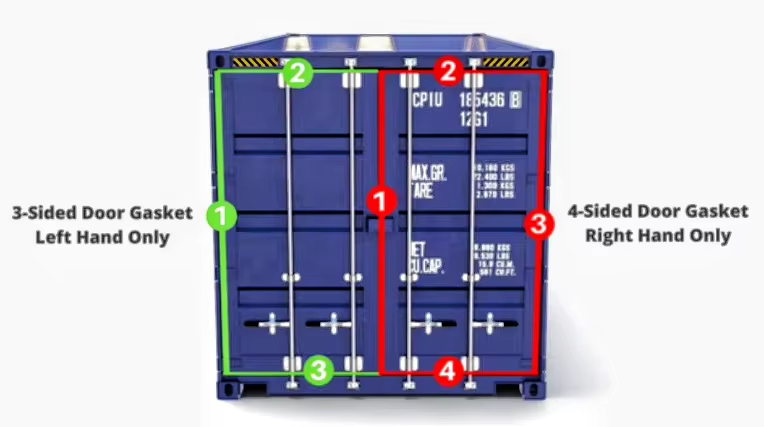
A three-sided gasket normally covers the header and two vertical sides when the door uses a separate sill, threshold or lower sealing arrangement. A four-sided gasket surrounds the full perimeter. The correct choice depends on the door construction; it cannot be determined from the vehicle type alone.
| Layout | Typical review points | Information to send |
|---|---|---|
| 3-sided | Header corners, both vertical sides, termination at the sill and interaction with the bottom seal. | Door opening dimensions, left/right orientation, end treatment and bottom sealing photos. |
| 4-sided | All four corners, bottom compression, drainage, latch/hinge gap and joint location. | Full perimeter, corner style, joint position, sill clearance and closed-door photos. |
EPDM Lip and Rigid PVC Channel: Different Functions
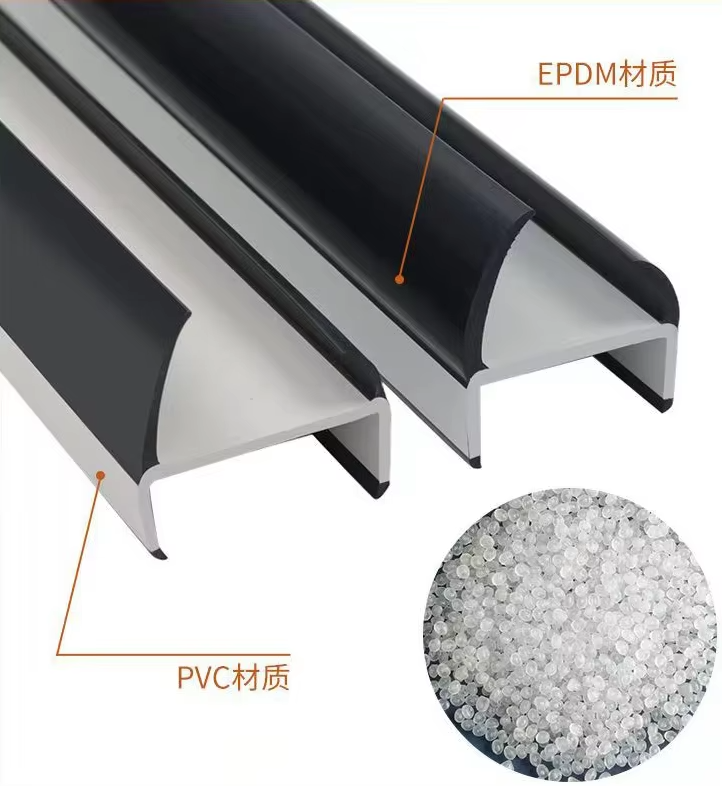
On many refrigerated-door retainer profiles, the flexible EPDM portion provides contact, recovery and weather resistance, while the rigid PVC portion supports mounting and retention. Both sections must fit the application. A correct flexible lip paired with the wrong carrier dimensions will not produce a reliable replacement.
Measurements Required for a Replacement Seal
| Measurement | How to record it | Why it matters |
|---|---|---|
| Retainer or channel | Opening width, internal width, depth, wall thickness, locking edges and insertion direction. | Determines whether the profile can mount and remain retained. |
| Relaxed cross-section | Overall width and height, carrier dimensions, lip length, angle and orientation. | Provides a stable geometry reference before compression. |
| Working door gap | Minimum and maximum closed clearance at header, sill, hinges and latches. | Shows whether the lips can maintain contact without excessive force. |
| Door perimeter | Measure each side separately and identify the three-sided or four-sided layout. | Defines total length, joints and corner requirements. |
| Original sample | Send a clean, unstretched section with both the flexible lip and carrier visible. | Supports material, construction and profile comparison. |
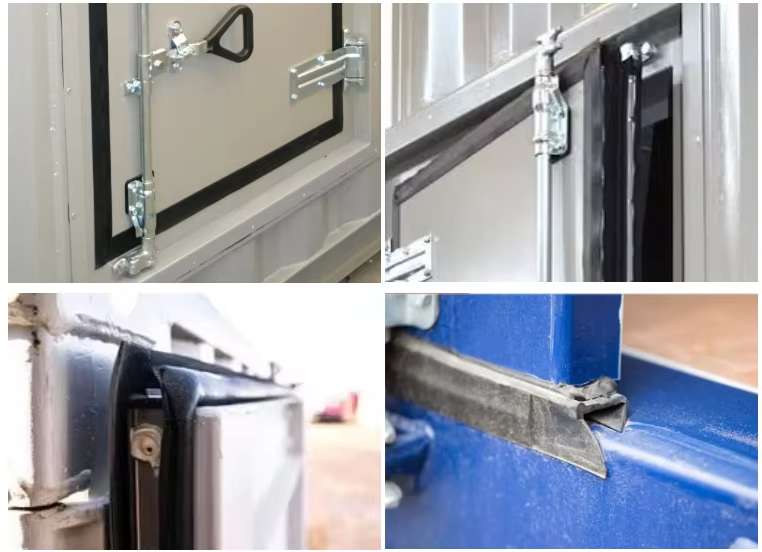
| Installation photos | Include wide door views plus close-ups of the retainer, corners and compressed seal. | Explains contact direction and installation constraints. |
For a more general measurement workflow, use the custom rubber seal profile measurement guide.
Replacement Review Process
- Remove a representative sample without stretching it.
- Clean the section and photograph it square-on beside a ruler or caliper.
- Measure the channel or retainer independently from the old gasket.
- Record minimum and maximum door gaps around the closed perimeter.
- Mark the flexible lip direction and which surface it contacts.
- Confirm three-sided or four-sided layout, total length, corners and joints.
- Compare the proposed sample on the actual door before production approval.
Common Selection Mistakes
- Ordering by outside width or vehicle model alone.
- Measuring a stretched, distorted or permanently compressed sample.
- Ignoring the internal retainer dimensions and locking features.
- Providing only an open-door photo without showing the closed working gap.
- Assuming a three-sided and four-sided gasket use the same cut and joint plan.
- Approving the material name without checking hardness, recovery and environmental requirements.
Reference Images
What to Send for an RFQ
- Square-on profile photo with ruler or caliper.
- Retainer or channel dimensions.
- Minimum and maximum closed-door gap.
- Three-sided or four-sided layout and total perimeter.
- Original sample availability.
- Required quantity, packing format, destination and timing.
- Known temperature, weather, cleaning or regulatory requirements.
Frequently Asked Questions
How do I choose a refrigerated truck door seal?
Match the complete cross-section, mounting interface, free lip direction, working gap and perimeter layout. Do not select by overall width alone.
What is the difference between a 27 mm and 57 mm profile?
The Onaseal 27 mm reference uses a narrower channel format, while the 57 mm reference uses a wider channel format. Complete geometry and working fit must still be verified.
Should I use a 3-sided or 4-sided gasket?
Use the arrangement required by the actual door and sill construction. Record the lower sealing method and corner or joint plan before ordering.
Can a seal be selected from a photo?
A photo can narrow the family, but a production selection should also include written measurements, a clean cross-section or sample, installed-door photos and quantity.
Which dimensions are most important?
The mounting channel or retainer, free cross-section, lip direction, working door gap, perimeter and corner construction are the critical starting points.